

Pressure-Based CFD Solver
Cadence Fidelity Flow PBS
Pressure-based configuration of the Fidelity Flow Solver — tuned for incompressible / low-Mach, multiphase, conjugate heat transfer, and combustion. Robust pressure-velocity coupling delivers stable convergence on the flow regimes where density-based solvers struggle.
Overview
Built for the Flow Regimes Where Density-Based Solvers Struggle
Pressure-based solvers shine when density changes are small — incompressible water, low-Mach air, fluid-thermal coupling, multiphase mixtures, and slow combustion. Fidelity Flow PBS uses robust pressure-velocity coupling so convergence stays stable on problems that traditionally need many iterations.
It's part of the same Fidelity Flow Solver framework as the density-based configuration — share meshes, share post-processing, share automation. Pick the right algorithm for the physics, keep the rest of the pipeline.
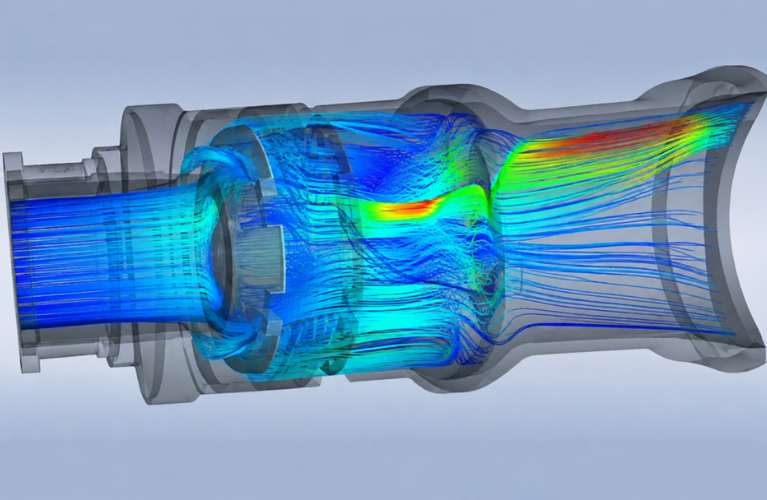
Where PBS Shines
Low-Mach, Multiphase, Thermal
Incompressible Flow
Liquids and low-Mach gas flow — the natural home for pressure-based formulations. Stable convergence where density-based methods struggle below Mach 0.3.
Conjugate Heat Transfer
Tight thermal-fluid coupling between solid and fluid domains — building HVAC, electronics cooling, heat exchangers, automotive thermal management.
Multiphase Flow
Liquid-gas, liquid-liquid, particulate flows. PBS handles phase fractions and mixture density variations cleanly.
Combustion & Reacting Flow
Low-Mach combustion modelling — premixed and non-premixed flames, FGM / flamelet tables for industrial burners and combustors.
Rotating Machinery
Pumps, fans, mixers, and other low-Mach rotating equipment where compressibility is not the dominant effect.
External / Internal Aero (Low-Mach)
Building aerodynamics, indoor airflow, ventilation — anywhere Mach < 0.3 makes density variation a second-order effect.
Numerics
Robust Pressure-Velocity Coupling
Segregated & Coupled
Segregated SIMPLE / PISO-style algorithms for stability on stiff problems; coupled formulation for fast convergence on simpler flows.
Steady & Transient
Steady RANS for design-point analysis; transient (DES, URANS, hybrid) for unsteady phenomena — vortex shedding, instabilities, transients.
All Mesh Types
Reads structured, unstructured, and hybrid meshes from the full Fidelity meshing family — no algorithm change required to switch.
GPU + CPU Acceleration
Modern parallel architecture — scale from workstation to HPC cluster, GPU-resident execution on supported platforms.
Massive Parallelisation
Domain decomposition across hundreds of CPU cores; MPI scaling proven on real industrial problems.
Python Automation
Headless Python API — automate parameter sweeps, design exploration, and CI-style regression sets.
PBS vs DBS
Pick the Right Algorithm for the Flow
Same Fidelity Flow framework. Same workflow. Different solver core for different physics.
Use PBS when…
- Mach number is low (typically < 0.3)
- Working with liquids or low-Mach gases
- CHT — strong thermal-fluid coupling matters
- Multiphase / multispecies mixtures
- Low-Mach combustion (burners, furnaces)
- Building / HVAC / indoor airflow
Use DBS when…
- Mach number is moderate to high (transonic to hypersonic)
- Density variations dominate the flow
- Shock-capturing matters
- High-speed aero, missile / re-entry, supersonic intakes
- Cavitation modelling
- Need Mach 0 → Mach 20 in one framework
Related
Works Well With
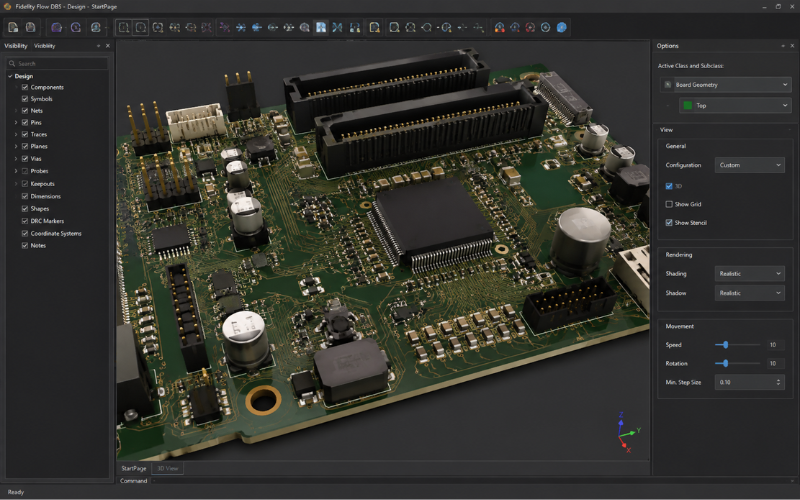
Fidelity Flow DBS
Density-based companion — for the compressible / high-speed flows where PBS isn't the right tool.
Learn More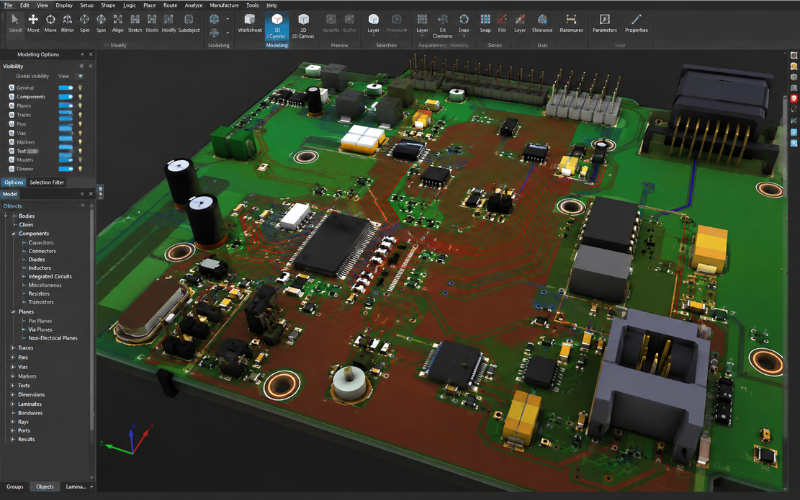
Fidelity Turbo
Rotating-machinery solver — pair with PBS for pumps, fans, and low-Mach turbomachinery.
Learn More
Fidelity Hexpress
High-quality meshing for the geometry that feeds PBS — 100% viscous-layer coverage for accurate CHT.
Learn More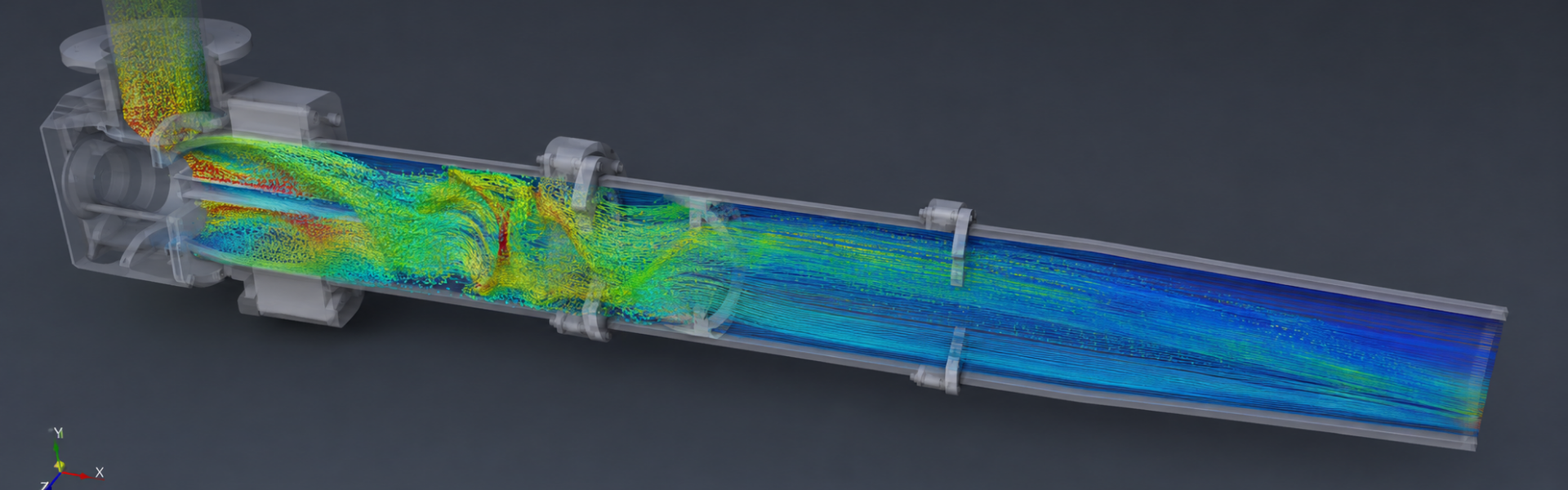
Get Started
Robust CFD for Low-Mach, Multiphase, Thermal
Talk to Craftronics about Fidelity Flow PBS — pressure-based CFD for the regimes where density-based methods struggle.