

Virtual Towing Tank for Naval Architects
Cadence Fidelity Fine Marine
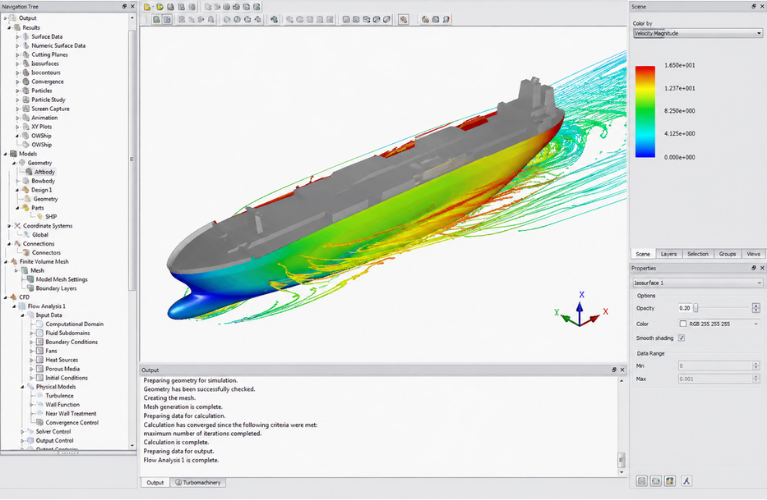
CFD software tailored for naval architects and marine engineers — a virtual towing tank for resistance calculations, propulsion modelling, and wind studies. Covers everything from tankers and luxury yachts to hydrofoils and open-water propellers, with reported up to 5× faster resistance calculations.
Overview
CFD Built for the Marine Discipline
Marine CFD has its own physics — free-surface flows, hull boundary layers, propeller-hull interaction, and slow-fluctuating loads. Fine Marine is purpose-built for these problems, not adapted from a generic aero solver.
The result is a virtual towing tank that minimises operating costs and lowers emissions while ensuring safe power margins — improving propeller efficiency, decreasing ship resistance, optimising performance, and increasing fuel efficiency.
Key Capabilities
Built for Marine Engineers
Free-Surface Flows
Accurate free-surface capture — wave-making resistance, hull-wave interaction, sloshing, green-water loading.
EEDI / EEXI Targets
Built for energy-efficiency targets (Energy Efficiency Design Index / Existing-ship Index) — assess design changes against regulatory thresholds.
Adaptive Grid Refinement
Adaptive grid refinement keeps mesh resolution focused where the physics needs it — accurate free-surface without paying for it everywhere.
C-Wizard Automation
C-Wizard automates the setup of standard marine CFD studies — repeatable, defensible runs without each engineer reinventing the wheel.
5x Faster Resistance
Reported up to 5x speed improvement on resistance calculations — design iteration becomes a daily activity, not a quarterly investment.
Manoeuvring & Wind
Manoeuvring simulations and wind studies — capture loads and stability margins beyond steady straight-ahead resistance.
What You Can Simulate
From Hull Forms to Open-Water Propellers
Resistance
Wave-making and viscous resistance — hull form optimisation against fuel and emissions targets.
Propulsion
Propeller-hull interaction, wake field analysis, self-propulsion factors, propeller efficiency.
Manoeuvring
Turning circles, zigzag tests, course-keeping — capture stability and control margins virtually.
Wind Studies
Wind loading on superstructures, antennas, and cargo for ship stability and seakeeping analysis.
Vessel Types
From Tankers to Hydrofoils
Tankers / Bulkers
Container Vessels
Sailing Yachts
Hydrofoils
Open-Water Propellers
High-Speed Craft
Sustainability
EEDI / EEXI-Aware From Day One
Marine CFD isn't just a performance question anymore — it's a compliance question. Fine Marine is set up to evaluate designs against the Energy Efficiency Design Index (EEDI) for newbuilds and the Existing-ship Index (EEXI) for retrofits — turn regulatory targets into design constraints early.
- EEDI / EEXI assessment built into the workflow
- Carbon-footprint reduction via hull-form optimisation
- Propeller-efficiency improvements at design stage
- Fuel-burn predictions from resistance results
- Retrofit feasibility studies for existing fleets
Related
Works Well With
Fidelity Flow PBS
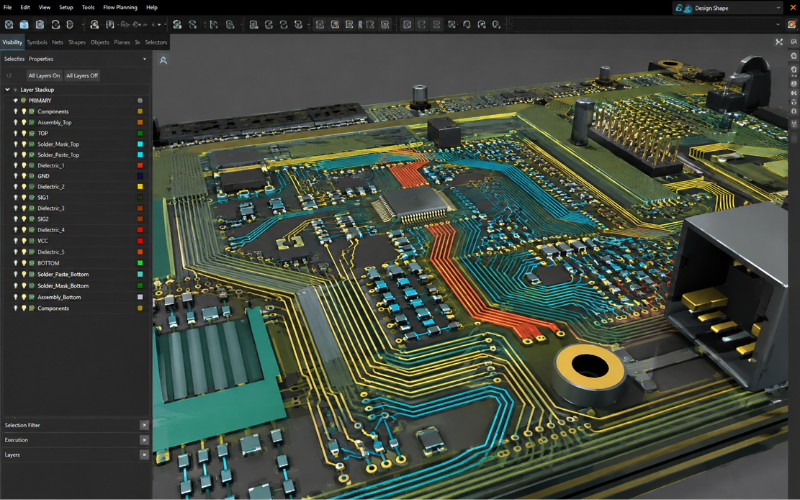
Low-Mach incompressible / free-surface CFD — complements Fine Marine when general-purpose solver is preferred.
Learn More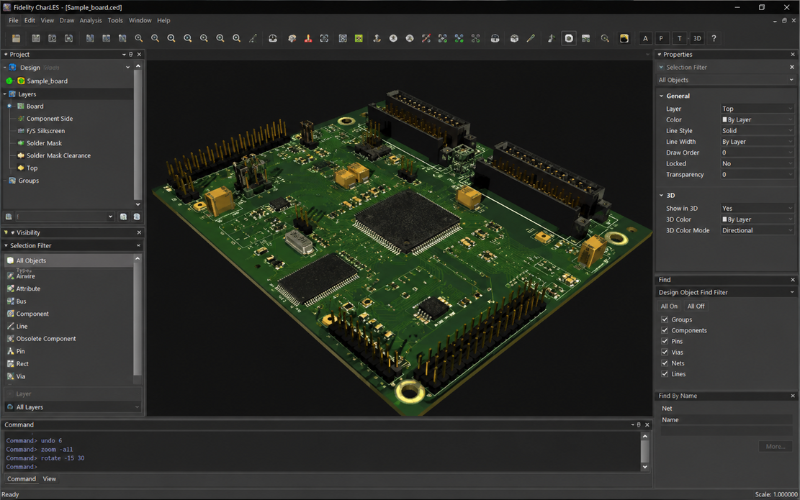
Fidelity CharLES
High-fidelity LES for marine aeroacoustics or unsteady wake analysis where Fine Marine RANS isn't enough.
Learn More
Fidelity Hexpress
Marine-quality meshing — boundary-layer capturing on hulls, refined wakes, free-surface refinement.
Learn More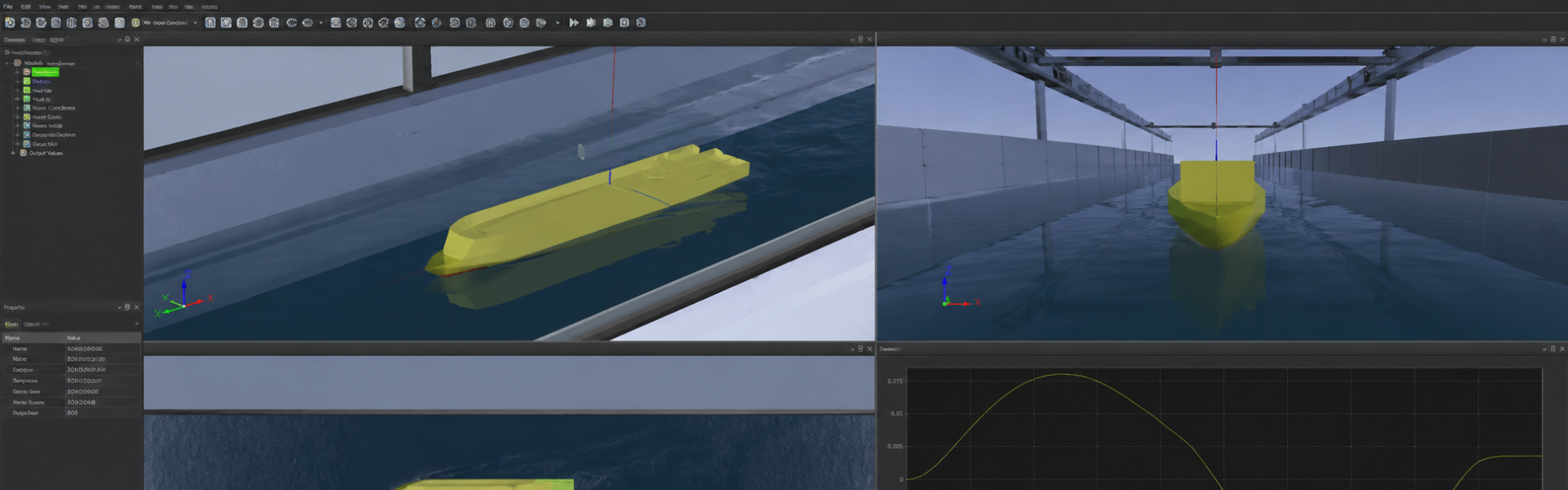
Get Started
A Virtual Towing Tank on Your Workstation
Talk to Craftronics about Fidelity Fine Marine — marine-domain CFD that turns design iteration into a daily activity.