

3D Planar EM Solver — S-Parameter Extraction & Verification
AWR AXIEM
3D planar method-of-moments (MoM) EM analysis simulator for passive structures, transmission lines, large planar antennas, and patch arrays. Delivers the accuracy, capacity, and speed designers need to characterise and optimise passive components on RF PCBs, modules, LTCCs, MMICs, RFICs, and antennas.
Overview
The Right Solver for Planar Structures
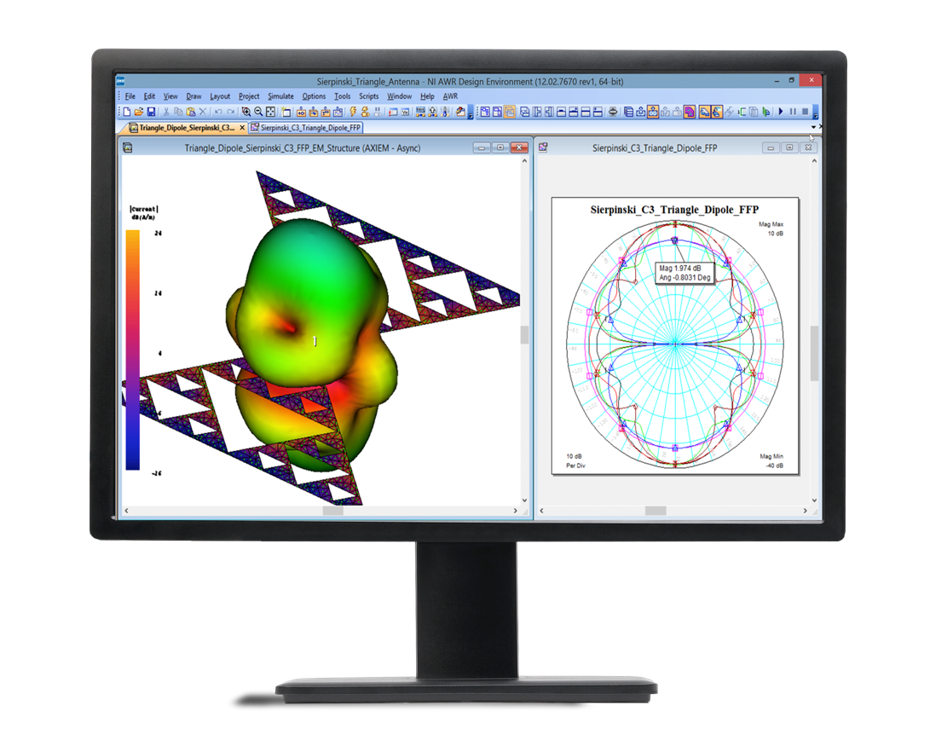
Planar structures dominate RF / microwave design — transmission lines, distributed passives, patch antennas, planar arrays. Method-of-Moments is the right numerical method for them: it only meshes conductors, ignores empty space, and scales beautifully to large planar geometries.
AXIEM is that MoM solver inside the AWR Design Environment — integrated with Microwave Office for schematic-driven EM extraction, so circuit and EM stay coupled across iterations.
Key Capabilities
Built for Planar EM at Scale
3D Planar MoM Engine
Method-of-Moments solver tuned for planar conductor structures — accurate S-parameters, lean meshing, and the right physics for layered media.
S-Parameter Extraction
Production-grade S-parameter extraction across the full frequency range — feed the result straight into Microwave Office or VSS.
Transmission Lines
Accurate characterisation of microstrip, stripline, coplanar waveguide, and other distributed-passive structures on any substrate stack.
Planar Antennas / Arrays
Large planar antennas and patch arrays — including coupling between elements and feed networks.
MWO Integration
Tight integration with Microwave Office for schematic-driven EM extraction (EXTRACT) — circuit and EM in one workflow.
Capacity & Speed
MoM's natural advantage on planar problems — large geometries simulate faster than equivalent full 3D FEM jobs.
What AXIEM Analyses
Planar Structures Across Every Fabric
Transmission Lines
Filters
Couplers
Patch Antennas
Planar Arrays
On-Chip Passives
Where AXIEM Fits
From RF PCBs to On-Chip Passives
RF PCBs
Characterise transmission lines, distributed passives, embedded structures, and PCB-level antennas with production-grade accuracy.
RF Modules
Multi-chip module passives, interconnects, and feed networks — model the electrical behaviour of the interconnect layer.
MMICs
On-chip passives, transmission lines, and matching networks for III-V MMIC designs. Schematic-driven EM extraction keeps physical and circuit in sync.
RFICs / LTCCs
Silicon RFIC passives and LTCC modules — broad fabric support without learning a new tool per technology.
MoM vs FEM
When AXIEM, When Analyst?
Both ship in the AWR Design Environment. Use the right tool for the geometry.
Use AXIEM (planar MoM) when…
- Structure is fundamentally planar (PCBs, MMIC layers, LTCCs)
- Transmission lines, distributed passives, planar arrays
- You need large planar geometries (scale matters)
- You want lean meshing — only conductors and dielectric interfaces
- Schematic-driven EM extraction is part of the workflow
- S-parameters back to Microwave Office is the goal
Use Analyst (3D FEM) when…
- Structure is fundamentally 3D (vias, bonds, connectors)
- Curved geometry, complex 3D interconnects
- Bondwires and 3D packaging effects matter
- Full 3D EM verification before tape-out
- Adaptive tetrahedral meshing handles arbitrary geometry
- You need the rigour of full-wave 3D
Related
Works Well With
Microwave Office
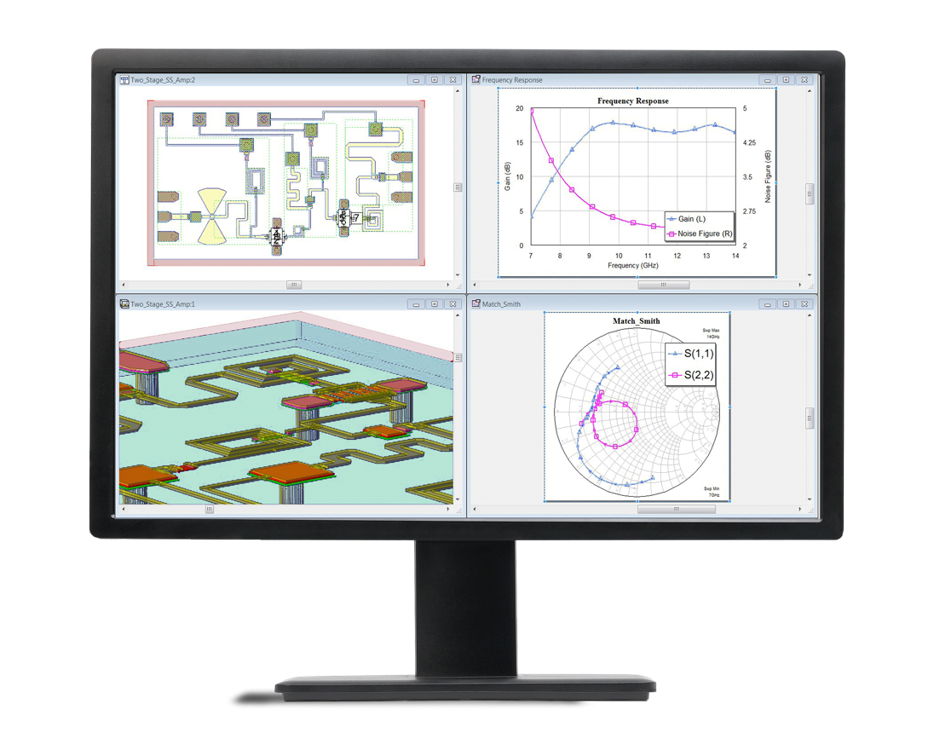
The natural circuit-design home for AXIEM EM extraction results — closed-loop circuit + EM.
Learn More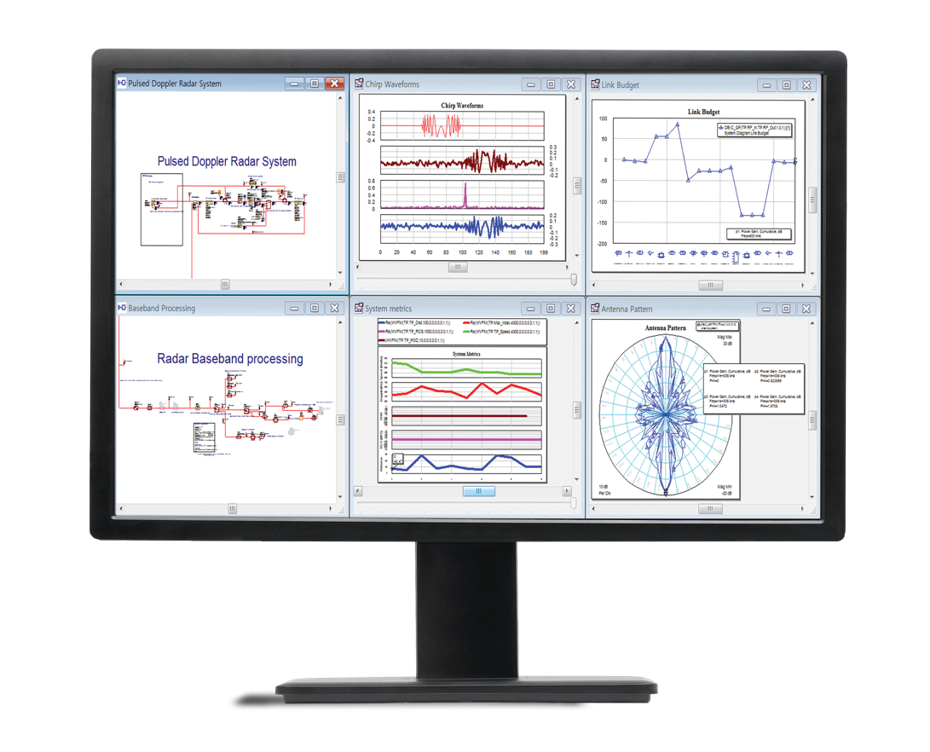
Visual System Simulator
Pass AXIEM-extracted S-parameters up to the system level for VSWR-aware behaviour.
Learn More
Clarity 3D Solver
Cadence multiphysics 3D EM solver — for the full 3D structures planar MoM doesn't fit.
Learn More
Get Started
Planar EM Done Right
Talk to Craftronics about AXIEM — production-grade S-parameter extraction for the planar structures that dominate RF.